Share your ideas on our Padlet Wall below…
Tuesday, April 29, 2014

Monday, September 16, 2013
September 12, 2013- Friday's Fabulous First Graders!
Don't forget about this Wednesday's PAGS (Parents of Academically Gifted Students) Event, (I've got my ice cream scoop ready!)
This week, we have two guest bloggers. Harper helped record what we did during our math problem solving lesson and Sydney shared her thoughts about our creative problem solving activity. I appreciate their contributions!
We began with our math problem solving work.
"Today we worked on learning strategies. It was hard to keep up when we were counting in our head. We made a table and a list. The list worked best."
-Harper, 1st Grade
We discussed problem solving strategies we use regularly such as using objects and drawing a picture.
We began with our math problem solving work.
"Today we worked on learning strategies. It was hard to keep up when we were counting in our head. We made a table and a list. The list worked best."
-Harper, 1st Grade
We discussed problem solving strategies we use regularly such as using objects and drawing a picture.

Then I explained I needed to figure out how many pencils, ink pens and markers I had in the containers on my desk. They tried using their fingers to keep track, but as I called out, "Ink pen, ink pen, pencil, marker, marker, marker, pencil, pencil..." they quickly lost count. The students talked about other strategies to help them keep track so they could determine how many I had of each. They tried the strategy of drawing pictures, but it was quickly ruled out as it was too slow. They also tried making a table, but tables were new to the students and some recorded two or more items in the same cell. This messed up their totals, but using a table was still better than the other strategies they tried.
They finally settled on making an organized list. With the three headings on their paper, they started again. This time the tally marks or "X's" had each student with a perfect count. This was definitely an appropriate strategy for solving a problem like this. The students finished their math time working independently in our SAGE Math program.
They finally settled on making an organized list. With the three headings on their paper, they started again. This time the tally marks or "X's" had each student with a perfect count. This was definitely an appropriate strategy for solving a problem like this. The students finished their math time working independently in our SAGE Math program.



We also worked independently in our Exploratory Centers. We are learning some interesting facts about insects, horses, seashells, armadillos and two and three dimensional shapes and figures. Most of the students have finished their knowledge level task and are currently working on the comprehension worksheet to show their understanding of the topic. Ask your child about his/her current Exploratory work.


We ended our day by discussing our K/1st grade academic vocabulary:
- Brainstorming- a tool we use to generate our ideas
- Fluency- the ability to generate many ideas
- Flexibility- the ability to adapt, change direction and approach a problem in a new way
- Originality- the ability to think of unique ideas
- Elaboration- the ability to add lots of details to our ideas, writing and drawings

The students then finished their creative problem solving "Squiggles." They had to create four very different cohesive pictures or scenes that incorporated the squiggle marks they were given. In this task, we focused on their flexibility of thought and elaboration skills.
"Today we did a squiggle for creative problem solving. We learned to add details to our pictures. I liked my first picture the best. Harper and Noah liked their third picture best and Delaney and Jamie liked their last picture the most. It was hard and fun too!"
-Sydney, 1st Grade
"Today we did a squiggle for creative problem solving. We learned to add details to our pictures. I liked my first picture the best. Harper and Noah liked their third picture best and Delaney and Jamie liked their last picture the most. It was hard and fun too!"
-Sydney, 1st Grade
They are a hard working, very creative group! Have a great week!
Friday, September 6, 2013
Friday's 1st Graders Are in Full Swing!
Woo Hoo! I now have everyone's paperwork, and most importantly, their media release. Thank you parents for helping me get these important "nuts and bolts" in place.
The boys and girls are settling in well. This will be a two week, blog post mashup....
On our first SAGE day, the boys and girls spent some time getting to know each other a little better. By the end of a fun game of "Would you rather...." we knew we all had some things in common.

We also read a beautiful book, Willoughby & the Lion. A golden lion grants Willoughby 10 wishes. The lion hopes Willoughby makes the greatest wish of all.... We then looked at some folklore about wishes such as wishbones, coins in fountains, eyelashes, dandelions etc.

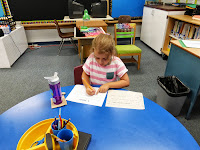
After that we each wrote four wishes of our own and made a very special wish project that will be on display at our Open House on Thursday, October 3rd between 5:30-7:00 PM here in our SAGE classroom.


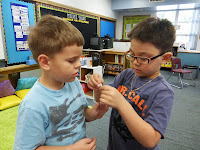
In the afternoon, the students took some time to look through the Exploratory Centers to find at least three they might be interested in starting.
 This week, they completed their Exploratory contract and were able to begin the Knowledge and in some cases Comprehension Level tasks. They each made a podcast to tell you something special they learned during their Exploratory time.
We ended our first day discussing ways we can communicate. Besides blogging as a class, we will also be sharing our learning on Twitter. Each of the students designed a bird of their own and posted their first "tweet" outside of our classroom on our bulletin board.

 This afternoon, the students had a few wonderful moments of frustration during our independent math problem solving work. I use the word "wonderful", because I want them to begin paying attention to those moments when they don't know the answer. Times when they feel frustrated and have to ask for some help. I want them to begin to recognize these as moments to celebrate. New challenges are precious moments of learning- not something to fear or shy away from but rather times to dig deep and know when they come home, they will have new learning to share with you.

The boys and girls are settling in well. This will be a two week, blog post mashup....
On our first SAGE day, the boys and girls spent some time getting to know each other a little better. By the end of a fun game of "Would you rather...." we knew we all had some things in common.

We also read a beautiful book, Willoughby & the Lion. A golden lion grants Willoughby 10 wishes. The lion hopes Willoughby makes the greatest wish of all.... We then looked at some folklore about wishes such as wishbones, coins in fountains, eyelashes, dandelions etc.


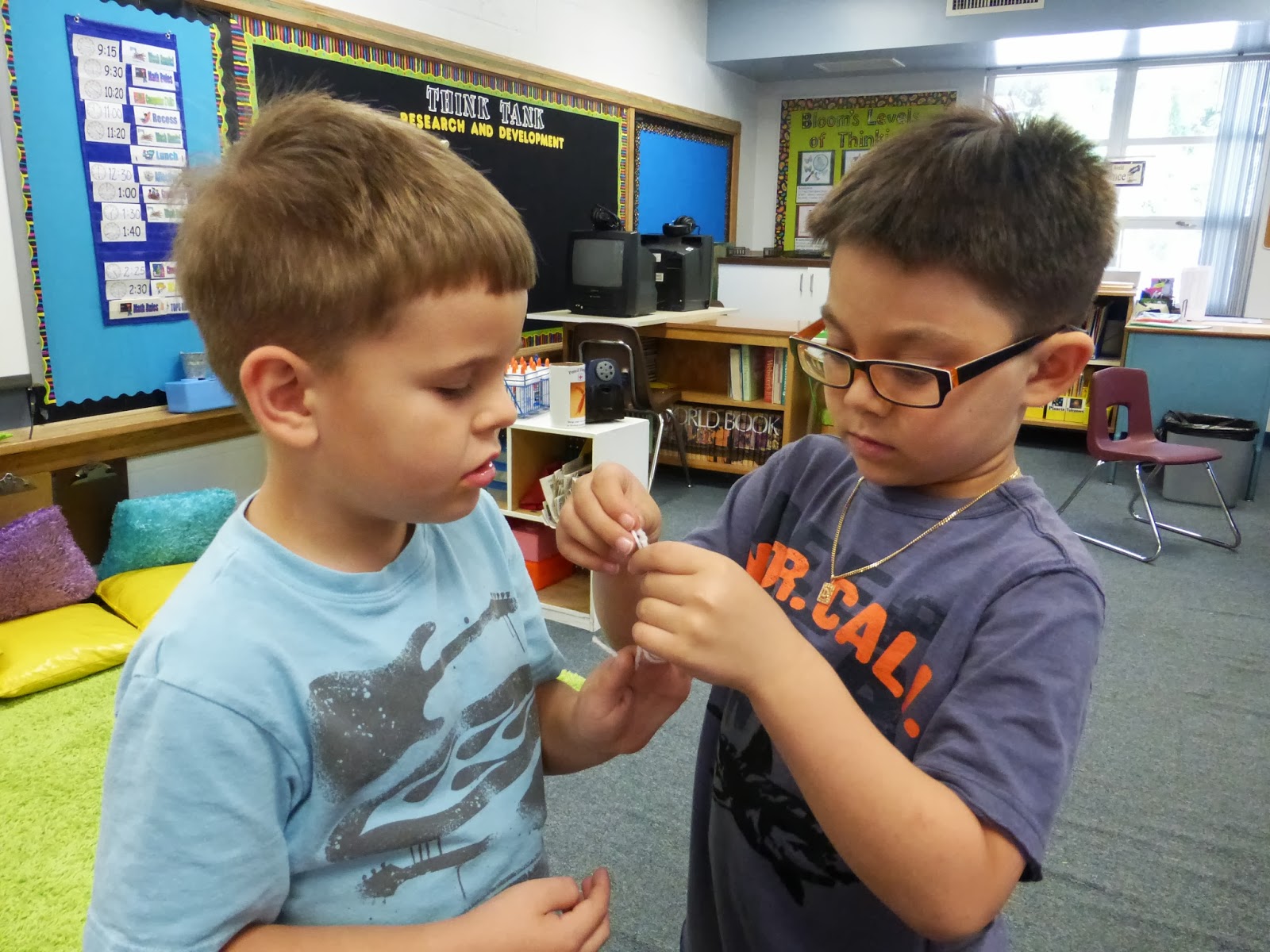
In the afternoon, the students took some time to look through the Exploratory Centers to find at least three they might be interested in starting.

We ended our first day discussing ways we can communicate. Besides blogging as a class, we will also be sharing our learning on Twitter. Each of the students designed a bird of their own and posted their first "tweet" outside of our classroom on our bulletin board.

You can follow us @KochSAGE on Twitter.
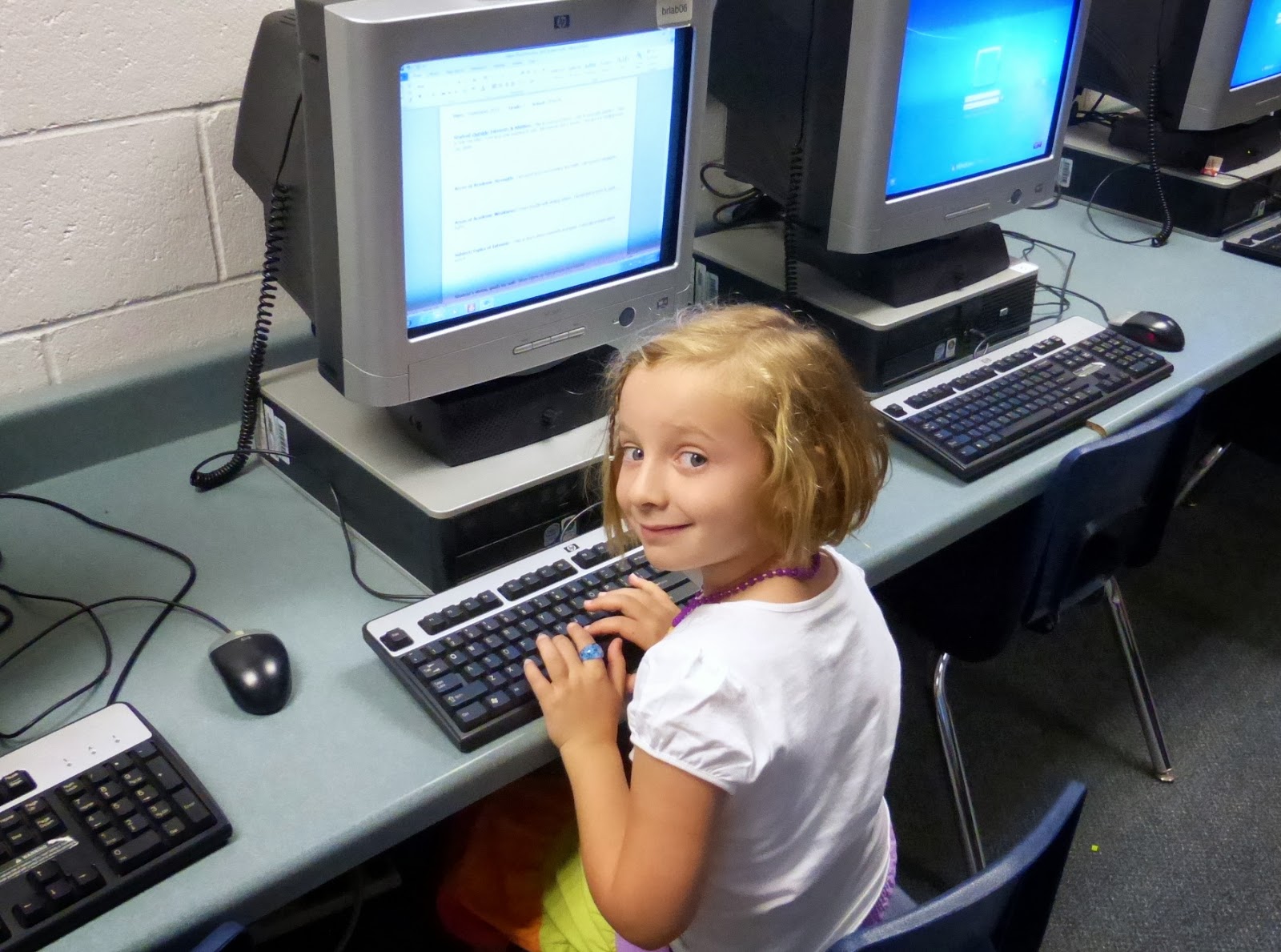
Today, the students worked in the computer lab to begin filling in their SAGE Profile. This is a document that will help me get to know them better by telling me about their activities and interests outside of school, as well as talents, academic strengths and weaknesses and learning topics of interest.


Later, we will have opportunities for more affective discussions where I hope they will learn empathy as they begin to recognize this is how most students feel every single day.
In the short run, it will be a little uncomfortable and I can't say that I don't expect a few tears. That is okay too. I want them to feel it now and learn to understand from where these feelings are coming. Learning to feel frustration and to be able to stay in the moment because they have the confidence to know they will succeed is the essence of perseverance.
It is going to be a great school year! Don't hesitate to call of email me if you or your child have any questions or concerns.
Monday, August 19, 2013
Thursday, February 28, 2013
First Grade Spelunkers Exploring Caves
Today, the boys and girls had an opportunity to learn and practice using Padlet.com, an online site for collaboratively sharing their ideas. Some of them had a chance over the snow days to watch the screencast tutorial, http://screencast-o-matic.com/watch/cInOVKVoQS.
Monday, February 25, 2013
Sharing Our Learning Through Technology
After your child has a chance to view the screencast tutorial on Padlet http://screencast-o-matic.com/watch/cInOVKVoQS, have him/her come back to our Padlet wall here, on our E Day blog. The students will be able to explore caves on a virtual website and then share their thoughts and learning below on our wall.
Tour the virtual cave. This is my very favorite caves website. There are many pictures of the different types of caves. Click on the dark pink links to see them. Be sure and enter the "Solution Cave." Solution cave is another name for limestone caves.
Be safe, stay warm and enjoy your snow day!
Tour the virtual cave. This is my very favorite caves website. There are many pictures of the different types of caves. Click on the dark pink links to see them. Be sure and enter the "Solution Cave." Solution cave is another name for limestone caves.
Be safe, stay warm and enjoy your snow day!
Wednesday, December 12, 2012
It May Be Cold Outside, But It Is Burning Hot in Our Classroom!
This week the boys and girls settled into class quickly and were ready to work hard! We started our day by meeting our newest Quirkle, Hallie Heat. From Hallie and her friends, we learned that dark colored clothing captures the sun's heat, while light colored clothing reflects the heat. We also learned that heat rises and cold falls. Ask your child to share their Quirkles science log, to tell you about their hypothesis and about our experiment shown below.


After recess and lunch, we worked on our individual Exploratory tasks. The new students each chose a center, filled out their Exploratory contract and began the knowledge level task (reading and watching a video) to learn more about their center topic. The rest of the students continued working on their projects. Ask your child about his/her current center and task.
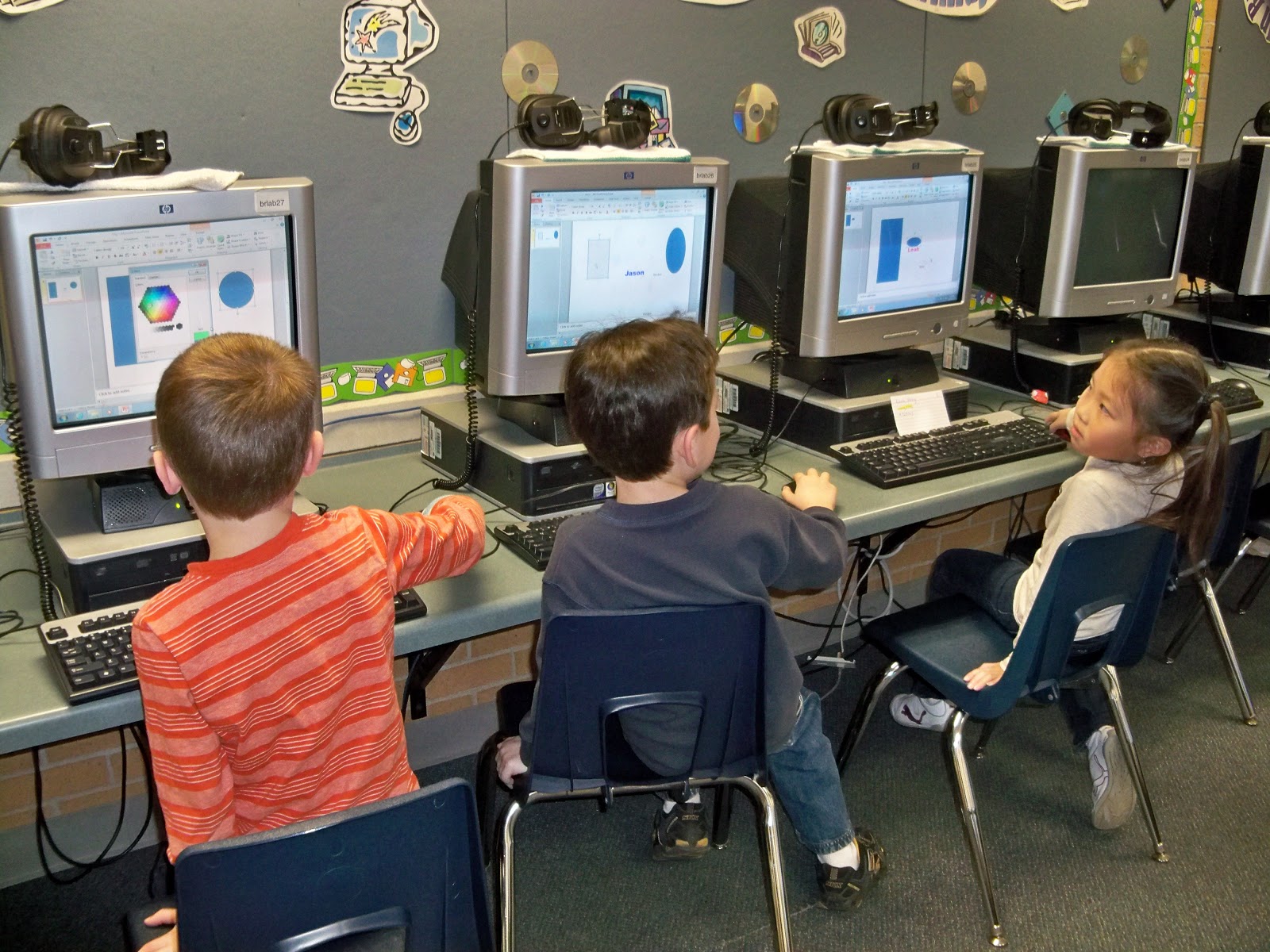
In the computer lab, the boys and girls continued to explore Microsoft Power Point. After getting our new students set up with a presentation, we all learned to insert a shape, resize it and move it around the slide. The students also learned to format the shape's fill color.
 Understanding the basic tools and functions of this program will transfer in the application of other Microsoft products and web based slide show applications. Power Point is a good slide show program, but it is also great for digital story telling, book reports, posters, and even holiday cards. Primary students soak up the functions with minimal instruction. When my own children lost their "computer gaming privileges" for one offense or another, they would always say, "But can we still do Power Point?"
If you have Power Point available on a home computer, consider allowing your child to practice.
Another busy, but fun day! Have a great week!
Thursday, December 6, 2012
There's Not Too Much That Beats Gilbert Gas!
Wow! This week we added two new first graders and three new kindergarten students. They had a bit of the "deer in the headlights" look when they arrived, but to be fair, so did I! LOL Seriously, they are an incredibly fun class. I loved the way the E day SAGE students welcomed and helped our newest friends!
We started our day with an activity to get to know one another better. The students created simple drawings to share some of their interests and a little about themselves.


 Next we worked individually in the TOPS Math program.
 We had a really fun day! We have been waiting for the exciting arrival of our favorite Quirkle, Gilbert Gas.
 Thanks to Steven Spangler Science and a
Google search or two, I was able to find some exciting
experiments that teach the states of matter. We discussed the different
forms water can take. The students easily shared what
they knew about the water cycle. They knew water was a liquid and
when it it frozen, it forms ice which is a solid. They knew water
evaporates when it is heated and becomes steam or water vapor, a gas. A
few students knew clouds were made of water vapor and when the clouds
are too full of moisture, the gas changes to liquid in the form of rain.
Thanks to Steven Spangler Science and a
Google search or two, I was able to find some exciting
experiments that teach the states of matter. We discussed the different
forms water can take. The students easily shared what
they knew about the water cycle. They knew water was a liquid and
when it it frozen, it forms ice which is a solid. They knew water
evaporates when it is heated and becomes steam or water vapor, a gas. A
few students knew clouds were made of water vapor and when the clouds
are too full of moisture, the gas changes to liquid in the form of rain.
I wanted to explore the states of matter with something with which they are unfamiliar. Dry ice was perfect. We learned dry ice is a solid and that it is the frozen form of carbon dioxide. We discussed carbon dioxide freezes at -109 degrees Fahrenheit so we needed to protect our skin from it by using gloves or tongs to handle the ice. The students also learned dry ice sublimates and goes from solid straight to a gas. Check out some of our experiments in the video and slide show below.


Boys and girls, what was your favorite experiment?
We started our day with an activity to get to know one another better. The students created simple drawings to share some of their interests and a little about themselves.


I wanted to explore the states of matter with something with which they are unfamiliar. Dry ice was perfect. We learned dry ice is a solid and that it is the frozen form of carbon dioxide. We discussed carbon dioxide freezes at -109 degrees Fahrenheit so we needed to protect our skin from it by using gloves or tongs to handle the ice. The students also learned dry ice sublimates and goes from solid straight to a gas. Check out some of our experiments in the video and slide show below.
Boys and girls, what was your favorite experiment?
Friday, November 16, 2012
Giving Our Very Best Effort
Today was a busy day, (so much so we pretty much forgot about getting any pictures.)
In the morning, the students worked at their Exploratory centers. The newer students selected their first center, filled out their contract and started the Knowledge level task. The rest of the students continued their individualized tasks.


 In
the computer lab, the boys and girls reviewed how to locate a document
in their SAGE shared drive file. The students learned to minimize, restore down and close a file.
In
the computer lab, the boys and girls reviewed how to locate a document
in their SAGE shared drive file. The students learned to minimize, restore down and close a file.
They also learned to open Microsoft Power Point Presentation, save it in their SAGE- shared drive file, and to insert and move a text box. We also discussed the differences and similarities between Microsoft Word and Microsoft Power Point.


Today we discussed what quality work looks like and the importance of giving our very best effort for finished projects. I am excited to see the students beginning to complete more time intensive projects.
Have a wonderful weekend!
In the morning, the students worked at their Exploratory centers. The newer students selected their first center, filled out their contract and started the Knowledge level task. The rest of the students continued their individualized tasks.
- Cadence has started a model of a firefly for the application level task.
- Kirby is learning about volcanoes by reading and watching videos. He has begun to show his knowledge on the comprehension level worksheet.
- Jason finished a great poster today showing the results of his analysis level experiments to test which magnets are the strongest.
- Kyla is doing a beautiful job designing tissue paper in Eric Carle's style for an application level task. Once she is done, she will make a synthesis level picture with them--inspired of course, by Eric Carle's illustrations.
- Julissa is learning about birds by watching a video and reading some books for the knowledge level task.
- Trig is working on classifying his new species of wild cat for his synthesis level task. (There is a ton of analysis going on to come up with the correct classification too!)
- Leah is conducting color experiments by mixing various combinations of colors for the synthesis level task. (Her job is to invent, describe, name and give suggested uses for an original color.)
- Colton has made models of the three types of volcanoes. This week he is typing up information about each to be displayed with his application level project.
- Reanna is working on learning information about butterflies for the knowledge level thinking task.
Did you get in mental images from my description??? Not nearly as fun as the photos, sorry! I can share with you an image or two of some of the finished projects we are currently displaying. Ask your child about how his/her project is going?


They also learned to open Microsoft Power Point Presentation, save it in their SAGE- shared drive file, and to insert and move a text box. We also discussed the differences and similarities between Microsoft Word and Microsoft Power Point.


Today we discussed what quality work looks like and the importance of giving our very best effort for finished projects. I am excited to see the students beginning to complete more time intensive projects.
Have a wonderful weekend!
Monday, November 12, 2012
Learning a Crucial Life Lesson
This week we welcomed two new friends. They are friendly and hard working and they are great additions to our class!
The past two weeks, w e have been exploring our creativity, flexibility of thought and ability to handle stress and frustration. To do this, we completed our first "hands-on" problem solving challenge. Using only one pair scissors, two paper clips, a 9 x 12 inch sheet of paper, two drinking straws, and three folder labels the students had to create the tallest, free standing structure possible.
They began with five minutes to brainstorm designs for their tower on their planning form. They were then given twenty minutes to actually construct their tower. It is fun to see the room go completely silent as each student's brain is fully engaged in the task. The students used a variety of designs for their towers. Some were successful, while others struggled to overcome design obstacles. They ended the task by evaluating their designs, construction and finished structure on their hands-on planning form.
To be successful, students must be fluent, flexible thinkers. They need a steady stream of ideas and they must be able to adapt and change direction or strategy as new problems arise.
Our 2nd Try:
This week, the students had a chance to try the same problem a second time. We usually do not have time to do this, but I wanted the students to recognize that they learn from their experiences and have the ability to improve with practice. You would think they would know this and, in most situations, they do but most gifted children are not used to struggling or failing at a task. When they face a new and very challenging problem they can't master on the first or second try, they want to quit. They appear to only want to do tasks or activities where they are successful. In reality, they are doubting their ability to overcome the obstacles. They are afraid they can't or won't be successful. They just haven't had enough experience with struggling, feeling frustrated and failing. This is where I see our children as "developmentally delayed." They are learning (hopefully) a crucial lesson other children learn between the ages of 3-5 years old.
For bright children, learning to be a "risk taker" and learning perseverance takes more than just practice. They also need encouragement and support as they build their confidence and recognize they can find success on a task at which they once failed. For most students, they need an opportunity to build success with increasingly more complicated challenges. In the child's eyes, the more important the task- the more difficult it will be for him or her to accept the learning curve necessary for mastery.
The problem solving tasks we do in class develop the skills needed to solve real world problems and provide wonderful opportunities for affective conversations. We discussed how individuals handle frustration and challenge, why some students quit and others persevere and how their classmates that struggle academically might feel each day. For some it is the "Ah Ha!" moment that enables them to empathize with their peers and avoid hurtful bragging. Having said that, it takes a great deal of maturity and wisdom for an individual to celebrate their academic success in a way that does not make someone else feel less and so, the conversation continues...
Next, the students were introduced to our newest Quirkle, Ellie Electricity. Our experiment asked the students how static electricity would effect a soap bubble? Check out your child's science log sheet to discuss his/her hypothesis.


In the computer lab, the boys and girls were introduced to using Microsoft Word. This week, they learned to open a new document, save it in their SAGE- shared drive file, and to format their text for size, style, color, bold, Italics and underlining.
 We ended our day working in TOPS Math & The Problem Solver.

We had just enough time for a quick game of SET. SET is a perception and spatial relations game where players must make sets of three cards. Each "set" must have all attributes, all the same or all different. This is another exciting game where your age doesn't matter. You can be 5 or 50 and compete on an equal level.
The past two weeks, w e have been exploring our creativity, flexibility of thought and ability to handle stress and frustration. To do this, we completed our first "hands-on" problem solving challenge. Using only one pair scissors, two paper clips, a 9 x 12 inch sheet of paper, two drinking straws, and three folder labels the students had to create the tallest, free standing structure possible.
They began with five minutes to brainstorm designs for their tower on their planning form. They were then given twenty minutes to actually construct their tower. It is fun to see the room go completely silent as each student's brain is fully engaged in the task. The students used a variety of designs for their towers. Some were successful, while others struggled to overcome design obstacles. They ended the task by evaluating their designs, construction and finished structure on their hands-on planning form.
To be successful, students must be fluent, flexible thinkers. They need a steady stream of ideas and they must be able to adapt and change direction or strategy as new problems arise.
Our 2nd Try:
This week, the students had a chance to try the same problem a second time. We usually do not have time to do this, but I wanted the students to recognize that they learn from their experiences and have the ability to improve with practice. You would think they would know this and, in most situations, they do but most gifted children are not used to struggling or failing at a task. When they face a new and very challenging problem they can't master on the first or second try, they want to quit. They appear to only want to do tasks or activities where they are successful. In reality, they are doubting their ability to overcome the obstacles. They are afraid they can't or won't be successful. They just haven't had enough experience with struggling, feeling frustrated and failing. This is where I see our children as "developmentally delayed." They are learning (hopefully) a crucial lesson other children learn between the ages of 3-5 years old.
For bright children, learning to be a "risk taker" and learning perseverance takes more than just practice. They also need encouragement and support as they build their confidence and recognize they can find success on a task at which they once failed. For most students, they need an opportunity to build success with increasingly more complicated challenges. In the child's eyes, the more important the task- the more difficult it will be for him or her to accept the learning curve necessary for mastery.
The problem solving tasks we do in class develop the skills needed to solve real world problems and provide wonderful opportunities for affective conversations. We discussed how individuals handle frustration and challenge, why some students quit and others persevere and how their classmates that struggle academically might feel each day. For some it is the "Ah Ha!" moment that enables them to empathize with their peers and avoid hurtful bragging. Having said that, it takes a great deal of maturity and wisdom for an individual to celebrate their academic success in a way that does not make someone else feel less and so, the conversation continues...
Next, the students were introduced to our newest Quirkle, Ellie Electricity. Our experiment asked the students how static electricity would effect a soap bubble? Check out your child's science log sheet to discuss his/her hypothesis.


In the computer lab, the boys and girls were introduced to using Microsoft Word. This week, they learned to open a new document, save it in their SAGE- shared drive file, and to format their text for size, style, color, bold, Italics and underlining.


Subscribe to:
Posts (Atom)